
MUD BARRIERS TO INSTALLING EV CHARGING
Parking Limitation: Limited number of parking spaces can be allocated for
shared EV charging
Parking Operation: MUD Property Managers need to maximize shared EV charging usage to minimize the number of shared parking spots. Alternatively, MUD Property Managers need a way to share power among a group of dedicated charging stations at assigned parking spots that minimizes disruption to parking spot logistics.
Electrical Infrastructure Cost: Conventional solutions require a dedicated
circuit/power for each charging station. MUD properties without sufficient
electrical capacity for the desired number of charging stations will require costly
electrical infrastructure upgrades.
Charging Station Cost: MUD property managers want to use cost-effective
charging stations that provide the required functionality
Operating Cost: It is challenging for MUD properties to establish a business
case for offering EV charging to residents. MUD Property Managers want lower
charging network provider fees and strategies to reduce power cost, along with
ability to bill for usage.
HOW OFFSITE OWNED-OPERATED CHARGING STATIONS CAN ADDRESS EV CHARGING BARRIERS
Parking Limitation: Does not require any changes to parking management
approach
Parking Operation: The charging stations are located off-site. Does not require
any changes to parking management approach
Electrical Infrastructure Cost: The charging stations are located off-site. None
to MUD property
Charging Station Cost: The charging stations are located off-site. None to MUD
property
Operating Cost: The charging stations are located off-site. No operating costs to
MUD property. Users pay commercial public charging rates which may be higher
than a MUD-located station could offer.
Example VCI-MUD Project Innovative Technologies Demonstrations:
Electric Vehicle Institute
TECHNOLOGY OVERVIEW
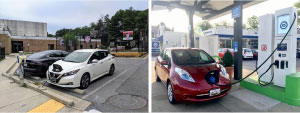
This approach is unique compared to the other technology approaches in the VCI-MUD toolkit because a third-party commercial charging station network provider installs/owns/operates charging stations that are available to the MUD property’s residents, as well as the general public. The technology vendor highlighted in the VCI-MUD project owns/operates the charging stations. In this case, the capital and operating costs are the responsibility of the vendor. Another option is for a nearby property to install charging stations that are made available for
use by the MUD property residents (e.g., during offhours). In both cases, charging station usage fees may be higher than a MUD-located station to compensate the third-party vendor’s investment and costs. In both cases to make this approach work, the MUD property management will have to work to communicate/partner with nearby MUD/commercial properties to identify a charging station location(s).